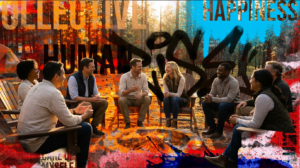
There’s something we need to say more clearly: love today doesn’t happen outside capitalism, it happens inside it, shaped by it, and often distorted by it.
We live in a system that teaches us, all the time, that happiness is something to be achieved, acquired, and displayed. It tells us that there is always a better version of life available, a better body, a better career, a better partner. And without realizing it, we start to apply this same logic to love.
Connection becomes a search for validation.
Relationships become a way to prove that we are desirable, worthy, complete.
Instead of meeting someone, we begin to look for someone who confirms that we are enough.
Within the LGBTQ+ experience, this can feel even more intense. Many of us grew up without mirrors, without validation, without safe spaces to exist as we are. So when we finally step into a world where connection is possible, it’s easy to confuse love with recognition. Easy to believe that being chosen by someone else will finally resolve something inside us.
But capitalism thrives on exactly that feeling, the idea that something is missing in you, and that fulfillment is always just one step away.
So love becomes part of the same cycle.
We start to evaluate people the way we evaluate products. Are they attractive enough? Stable enough? Interesting enough? Easy enough? Do they add value to my life? Do they elevate my image? Do they make me feel validated?

And at the same time, we place ourselves under that same pressure, to perform, to be desirable, to be effortless, to not be “too much.” We become both the consumer and the product. This is where something important gets lost: the understanding that no relationship can fix what is not broken, because you were never incomplete to begin with. The system wants you to believe that you are.
It needs you to keep searching, keep upgrading, keep replacing.
And that’s why so many relationships today feel fragile. Because they are built not on presence, but on expectation. Not on connection, but on projection.
We don’t just want to love, we want to be completed, validated, reassured that we are finally enough.
But no one can sustain that role for long. So when the other fails , when they disappoint, frustrate, or simply reveal themselves as human, the connection often collapses. Not because love wasn’t there, but because the expectation was impossible.
Add to that a culture of constant comparison, where social media and dating apps turn people into endless options, and intimacy starts to feel replaceable. There is always someone more attractive, more successful, more aligned. Or at least, that’s what the system keeps suggesting.
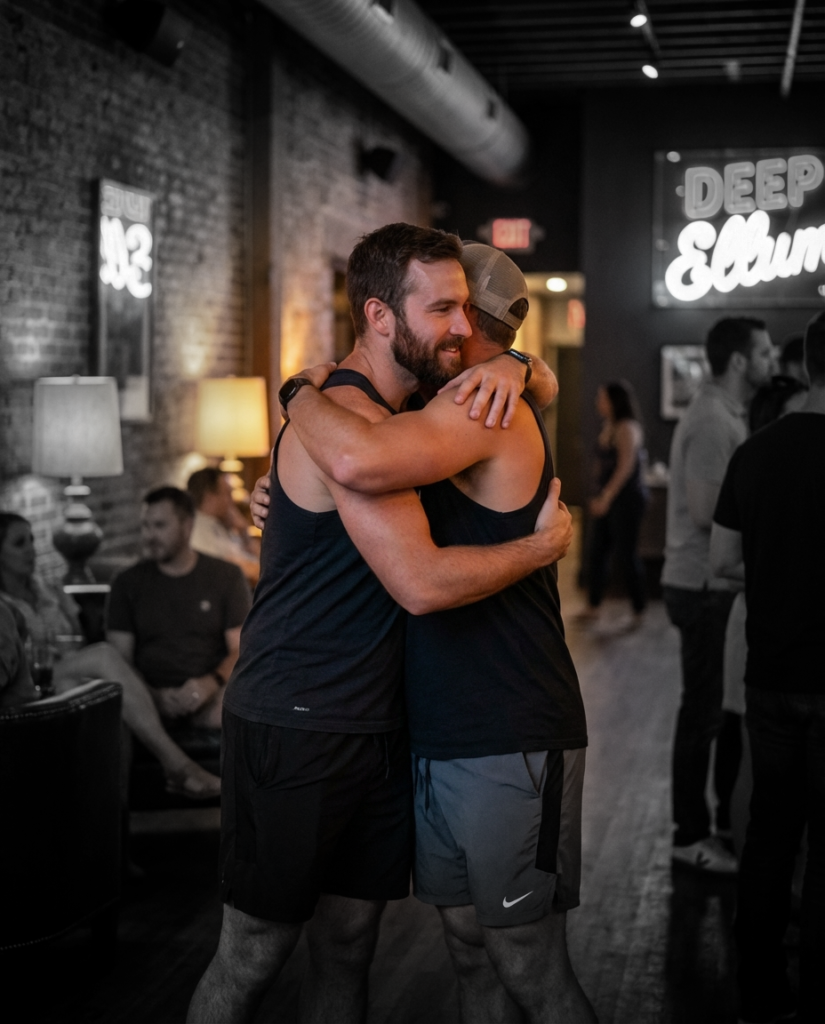

You already are.
And when that becomes real, not as a concept, but as something you actually feel, everything changes. Love stops being a search for confirmation and becomes a space of encounter. A place where two complete people meet, not to fix each other, but to share something that neither of them needs in order to exist.
Maybe loving, today, is exactly that.
Not a way to fill a void.
Not a way to prove anything.
Not a way to finally become enough.
But a choice, conscious, imperfect, human, to connect without turning the other into a solution.

In a world that constantly tells you to look outside for completion, choosing to recognize that you are already whole might be the most powerful form of resistance there is.